

- 45% of workers are more likely to stay in their role if they receive training
- 68% of employees say they prefer to learn and train at work
At Transform Consulting Group (TCG), we work with organizations to develop leaders, strengthen teams, build a healthy work culture, and attract future change-makers. Your board members, employees, donors, and those whose lives are changed by your programs and services are all agents of transformation. We work with you to capitalize on the passion and performance of each stakeholder to drive continual transformation.
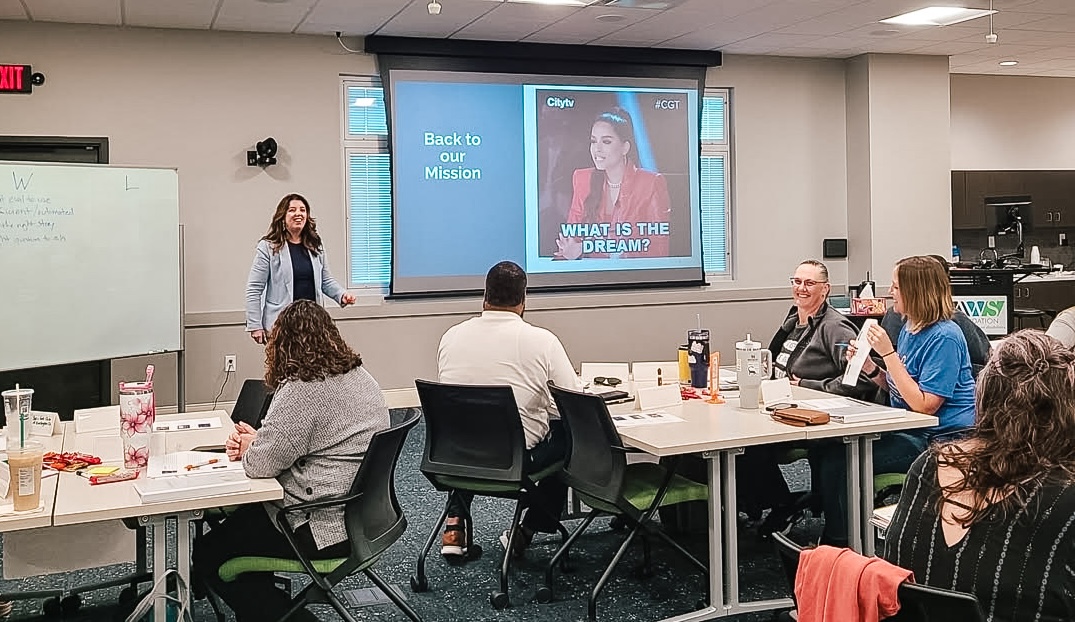
Whether you have a group of 10 or 500, in-person or virtual, our training participants say sessions are engaging and practical. We do more than facilitate a workshop—we prep your team with supporting materials in advance, and a subject matter expert from our team works with you to understand and address your specific needs. As former practitioners, we have been in your shoes.
We love leading impactful workshops, webinars, and in-person training series designed to help nonprofits, community foundations, and government entities develop more data-informed practices, build capacity, and enhance leadership skills. In 2024, we facilitated 31 training sessions for over 600 participants! We’re sharing key learnings and practical tips for successfully implementing professional development workshops and training.
One way nonprofit organizations access training and professional development is through local foundations. Philanthropic partners see the value in investing in local nonprofit organizations’ capacity.
We have worked with several foundations to build capacity for their local nonprofit organizations by offering a training series on nonprofit management and data literacy.
Johnson County Community Foundation
Johnson County Community Foundation noticed trends in learning opportunities for its grantees. TCG partnered with the foundation to facilitate the Elevate Impact 2024 Nonprofit Training Series. This training series aimed to support passionate nonprofit leaders and organizations with the knowledge, skills, and inspiration needed to drive positive change in Johnson County.
Our comprehensive nonprofit training workshops equip leaders with the tools they need to continue to make a lasting impact. Session topics included:
- Getting the Most Bang for Your Board
- Effective Strategic Planning
- Strategic Planning Implementation
- Evaluation 101
- Using Data to Tell Your Story
- Fundraising
Excellent presenter who speaks clearly, slowly, easily relatable, and is a subject matter expert on evaluating your data! – Training Participant
AWS Foundation
AWS Foundation’s mission is to help children and adults with enduring intellectual, developmental, and physical disabilities live as independently as possible, be included in the community, and function at their highest potential. They carry out this mission by supporting nonprofit organizations’ programs, capital needs, and operations in their priority areas, as well as related opportunities that enhance the lives of people with disabilities. AWS Foundation reached out to TCG to support the development of nonprofit executive leaders’ data literacy.
TCG led a four-part data literacy training series for a cohort of 12 nonprofit organizations. The series topics included:
- Evaluation 101
- Becoming a Data-Informed Organization
- Developing Logic Models and SMART Outcomes
- Using Data to Tell Your Story
This is one of the best trainings I’ve ever had. Everyone was engaged. It was a lot of information, but it all made sense. –Training Participant
Benefits for Community Foundations to Invest in Nonprofit Leaders
Strengthen the Capacity of Your Grantees
Many nonprofits, especially smaller ones, operate with limited resources and stretched-thin staff. A training series can equip grantees with essential skills, practical tools, and resources to build sustainable organizations.
Increase the Impact of Your Grants
A grant is more than a check—it’s an investment in change. By offering training, grantees effectively utilize resources, adhere to requirements, and measure outcomes meaningfully. The benefits impact everyone: grantees grow more confident in their operations, and your foundation can better demonstrate the return on its philanthropic investments.
Foster Stronger Relationships
Hosting a training series creates opportunities to engage with grantees beyond transactional grant cycles. It allows your foundation to increase collaboration and partner in their success beyond the grant cycle. This relationship-building fosters trust, opens lines of communication, and creates a sense of shared purpose, leaving the grantees feeling supported and valued.
Promote Peer Learning and Collaboration
Nonprofit leaders often work in silos, tackling challenges unique to their missions. A training series brings grantees together in a shared learning environment to exchange ideas, strategies, and solutions. These connections can lead to long-term collaborations, stronger networks, and even innovative partnerships that extend beyond your foundation’s direct involvement.
Demonstrate Your Commitment to Capacity-Building
When foundations prioritize capacity-building, they send a clear message. They’re invested in their grantees’ success, not just their programs’ success. This approach reinforces the foundation’s role as a leader and community convener.
Our philanthropic partners understood that by offering a training series, they were investing in creating a long-term impact that extends far beyond a single grant cycle. It’s not just about providing funding to nonprofits, but also about equipping them with the tools and support needed to thrive in an ever-changing work environment.
Are you ready to “Train Up Your Transformers?” Learn more about what it looks like to partner with our team and our training topics here.