

Do you have a strategic plan yet to be implemented and sitting on a shelf? Your staff and board spent countless hours of time and money (if you hired a consultant) to develop a strategic plan, but now you are struggling with what to do next.
After we complete the four-step strategic planning process with our clients, we go through a few key items with the board and leadership to ensure that they are set up for success in implementing the strategic plan.
“All leaders know that results require both strategy and execution. Unfortunately, we overvalue strategy and underestimate the challenges of execution.” – Sean Covey
What to do next with your Strategic Plan?
1. Create an Implementation Plan
Make sure that your strategic plan is actionable and detailed. For our clients, we create “Implementation Plans” that provide more granular detail to operationalize the goals and strategies in the strategic plan. The Implementation Plan includes action steps or milestones to complete the strategy, who is responsible (staff position and/or board committee), a timeline (by quarter or month), and status (not started yet, on track, behind, completed). Our plan is formatted in Excel or Google Sheets, which can more easily track the completion of action items and use formulas to create charts and visuals that you can pull up during staff or board meetings.
45% of nearly 800 executives reported that their strategic planning process failed to track the execution of strategic initiatives.
2. Integrate within the Existing Meeting Structure
Your organization most likely has multiple team meetings in place. Include the strategic plan in your meeting cadence. Use your team meeting time to discuss strategies, review progress, and discuss possible changes to pivot. Some key meetings to consider include:
- Board & Committee Meetings
- Senior Leadership Team Meetings
- Middle Manager Leadership Team Meetings
- Strategic Initiative Committees
- 1:1 Direct Report Meetings
- Organization All Staff Meetings
Reflection Questions:
- What changes to your organization’s meeting structure would need to happen to support the facilitation of implementation?
- What meetings could your organization remove or repurpose to support the addition of strategic plan implementation meetings?
3. Clarify Roles and Responsibilities
Everyone in the organization is responsible for implementing the strategy. Identify each team member’s role and responsibility in its execution. Clarify the critical roles within an organization—the Board of Directors, CEO, Leadership Team, Strategic Planning Committee, and Department Leads. Identifying and aligning the new strategic plan with what you are already accomplishing will help ensure its implementation and completion.
4. Communicate and Disseminate
After you’ve spent all this time engaging individuals within your organization and the community to inform your new strategy, it is critical to circle back to everyone and share your final plan. At a minimum, communicate with everyone you engaged in during the strategic planning process so that they can see how their feedback and input were reflected in the final plan. In addition, there are a few other key individuals and groups to share your strategic plan with:
- Staff – it is important to share the strategic plan with staff to help them understand the goals and strategies and how this aligns with their role and team. You can do this through an all-staff meeting, a recording from the CEO to all staff, an email communication to all staff, and many other ways.
- Funders – your new strategic plan can be a great way to engage current or past funders in supporting your work.
- Partners – your new strategic plan can be a great way to strengthen existing partners and cultivate new partners to support your goals.
- Clients – a new strategic plan is a great way to inform your clients of your priorities and how this will help them.
- Public – a new strategic plan can be great for building brand awareness in your community and increasing the public’s knowledge of your organization. You can host a press conference to announce your new strategic plan, write an op-ed for your local newspaper, and share it across your social media channels.
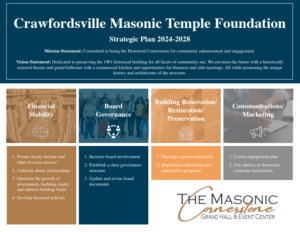
Pro Tip:
We recommend creating a one-page, public-facing strategic plan. This plan will typically include your mission, vision, goals, strategies, and indicators of success.
By following these four suggestions, your strategic plan will be loved like an old, favorite book! Are you interested in learning more about our strategic planning solutions and how TCG can support your planning and implementation efforts? You can schedule time to speak with a team member for a free consultation.