Have you ever moved to a new community and wanted to get connected, but didn’t know where to start? Maybe you have had a tangible need presented to you by a friend or family member, but you didn’t know where to direct them to get help? For many communities, an asset map serves as the perfect connection point between individuals and services.
An asset map contains the details of available resources, organizations, clubs, boards, and more. This map can help individuals find specific organizations, such as home assistance or guidance on joining a committee. The map can also serve as a decision-making tool, highlighting potential strengths and/or gaps within the community.
We helped a local United Fund organization create its own asset map focused on its three main service areas. During our work, we developed a list of steps that can assist other organizations in building their own asset map.
Four Steps to Build Your Asset Map
1. Consider the Assets to Include
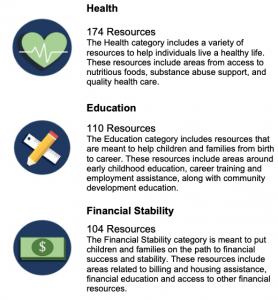
Start by determining the purpose of the asset map you’re creating and who the map will serve. Consider the focus area the assets will be framed around. For the United Fund, we built the asset map around their three pillars of focus: health, education, and financial stability.
Once the audience and purpose are identified, begin researching functioning assets. These can include, but are not limited to:
- Nonprofit organizations
- Community and individual serving organizations
- Boards
- Coalitions
- Committees
- Faith-based organizations
- Other local businesses
2. Determine the Level of Detail for Each Asset
Now that you know what type of assets you want, consider the level of detail that should be included with each asset as you make a list. An asset map serves as a one-stop-shop for people to learn the necessary details about community assets before they pursue options.
Here are categories we included in the United Fund asset map:
- Contact name, phone number, and email
- Location
- Hours of operation or meeting time
- Eligibility criteria (ages served, genders served, income level accepted, residence, etc.)
- Service area(s) (health, mental health, early childhood, housing, etc.)
- Website url
Also consider a process to regularly check the validity of the detailed information. Scheduled maintenance may be necessary to make sure asset information is up to date.
3. Find the Asset Information
Finding accurate information can be time-consuming and may require several approaches. Consider calling organizations, conducting web searches, and connecting with community contacts to determine whether there are current resource lists that can serve as a starting point. For example, the local Community Foundation may have a running list of potential funders. You can also hold a focus group with a local board or committee. These groups include members who can bring insight and suggestions to contribute to the asset map. We had a focus group meeting with the United Fund’s board members. We gave them an overview of the asset map’s purpose, then asked them to brainstorm any and all community resources. They wrote each one on a sticky note and placed them on a sheet labeled with one of the three service areas. We combined similar resources, which helped us determine exactly which information to gather.
4. Build and Store the Assets
Once you have your complete list of assets, you’ll need to determine how to store the information and make it accessible to the community. There are several options for building an asset map, depending on what fits your organization, staffing, and budget. At TCG, we love interactive platforms that let people easily find specific resources using filters and criteria. We use Tableau to develop interactive dashboards. Once the workbook is published, the dashboard is embedded on the host’s website. The United Fund’s Asset Map is built across three primary tabs with filters and search boxes to help people navigate to their desired resource.

Are you ready to start building an asset map to benefit your community? We’d love to hear from you, and walk you through the process!